
Interventional Pain Procedures
When pain continues despite conventional treatment, interventional pain management can offer targeted, minimally invasive options. Every procedure begins with appropriate assessment and diagnosis, followed by a treatment plan tailored to the individual.
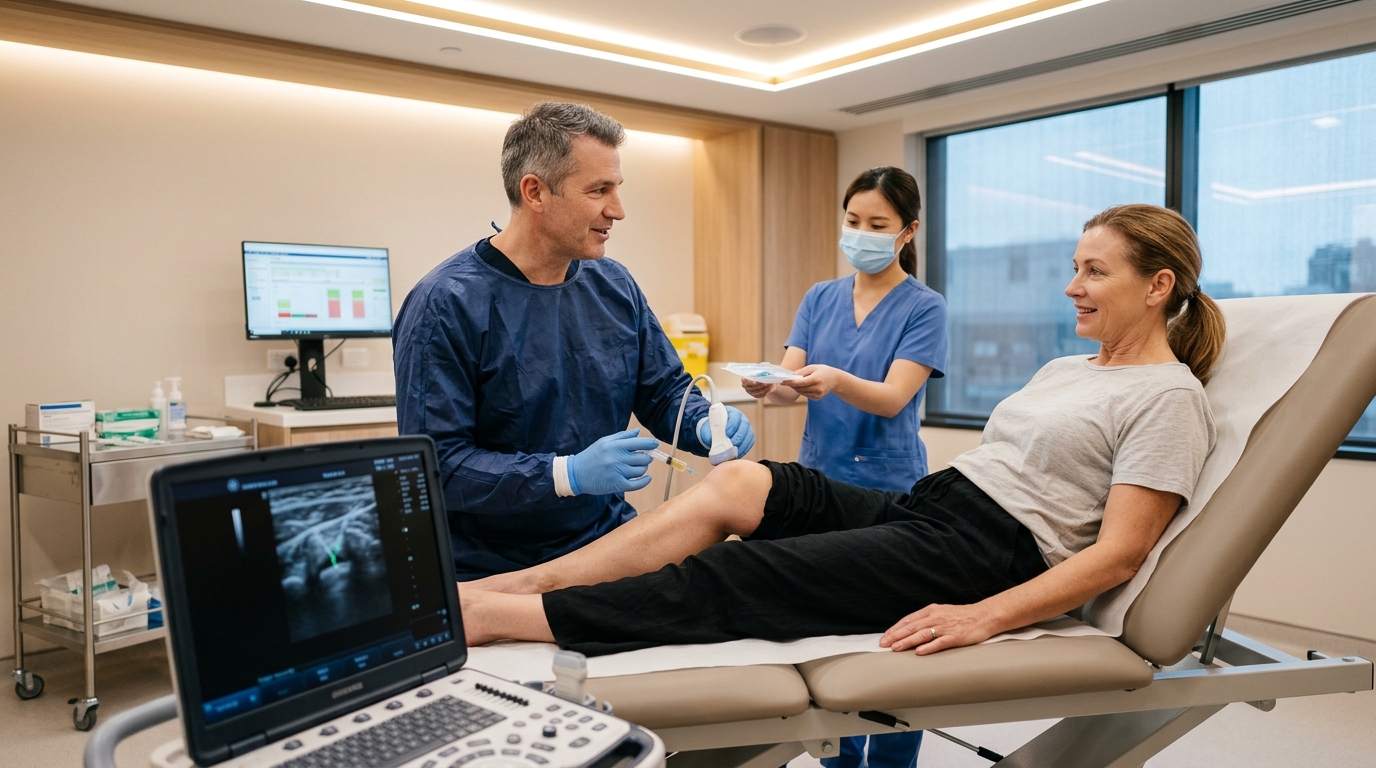
Inside this department
- Neuromodulation: techniques that work on pain signalling pathways for selected chronic pain conditions
- Epiduroplasty: a minimally invasive option for selected spinal conditions
- Regenerative therapies: Platelet-Rich Plasma (PRP) approaches that support biological healing
- Radiofrequency Ablation (VENOM™ RFA): controlled thermal energy to reduce pain signals from specific nerves
- Ultrasound-guided injections: high-resolution image guidance for precise delivery
How the journey runs
Step 1 · Diagnosis
We begin by understanding the condition, your history and how it affects daily life, then identify the most appropriate treatment approach.
Step 2 · Treatment
Where an intervention is recommended, the procedure is planned with precision and explained clearly before treatment.
Step 3 · Recovery
Recovery and rehabilitation are considered part of the wider care journey, with support from physiotherapy and our wider team.
Is this right for me?
People with persistent spine, joint or nerve-related pain may be considered when medication, activity changes or rehabilitation alone have not provided enough relief. A pain physician confirms the source of symptoms before recommending any procedure.
Benefits of this care
- Targets a clearly identified source of pain
- Uses image guidance to support accuracy and safety
- Often allows a shorter recovery than open surgery
- Can create a more comfortable window for rehabilitation
Often paired with
Questions about interventional pain procedures
What conditions qualify for interventional pain procedures?
Persistent back pain, neck pain, sciatica, facet arthritis, joint osteoarthritis, and neuropathic pain when conservative care has not provided sufficient relief.
Are interventional pain procedures performed as open surgery?
No. These are day-care, minimally invasive procedures performed under local anaesthesia with high-resolution ultrasound or fluoroscopic C-arm guidance.
How quickly can I return to light daily activities after treatment?
Most patients return home the same day and resume light desk activities within 24 to 48 hours, supported by guided physiotherapy.
Related treatment guides and articles
Guided by our clinical team
Every procedure and rehabilitation protocol is overseen by our pain physicians in Raidurgam.
Take the first step
Your pain ends here.
Your life begins.
You have more to life than managing pain. Take the first step towards better movement, greater comfort and a healthier tomorrow.
Prefer to call? +91 9676 741 888 / +91 9676 926 888